Private by Default: Be Careful Sharing Detecting Locations
Why detectorists should keep their sites private — landowner trust, site preservation, theft risk — and how local-first logging protects your spots.
Updated
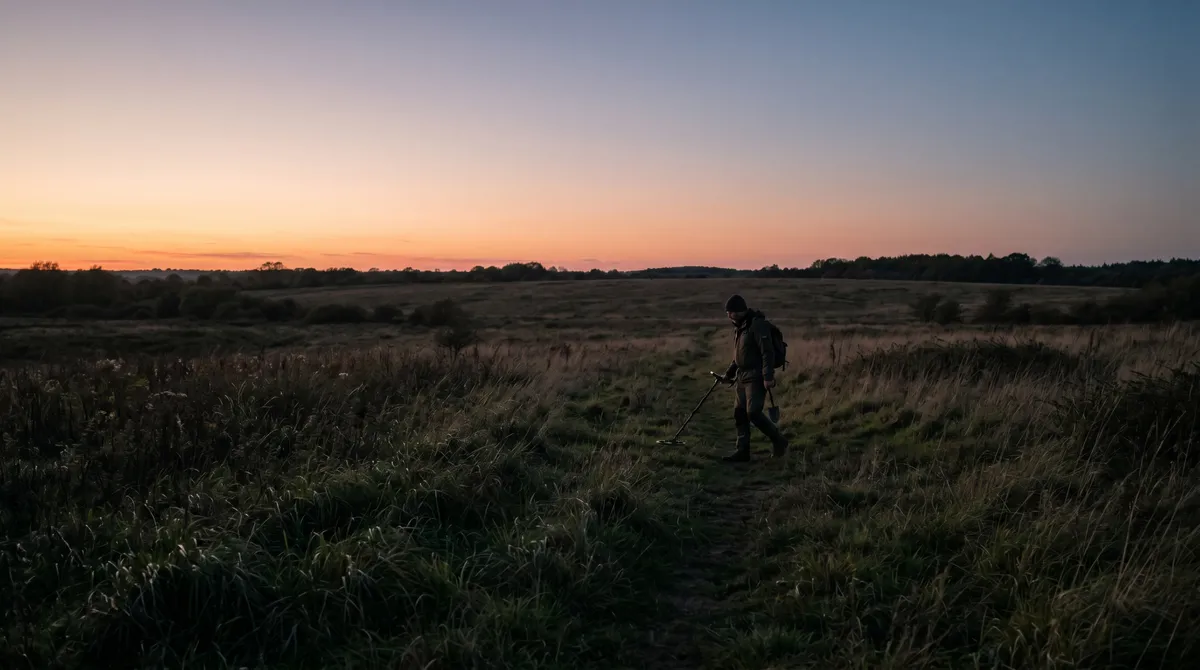
Ask an experienced detectorist where they found their best piece and watch them smile and change the subject. It’s not rudeness. It’s one of the oldest, most sensible habits in the hobby. Your locations are sensitive information, and treating them that way protects your finds, your access, and the sites themselves.
Here’s why privacy matters, and how to keep your spots yours.
Why detectorists guard their sites
There are real reasons the good ones stay quiet:
- Landowner trust. A landowner gave you permission, not the internet. Broadcast their land and you’ve broken the trust that got you access — and probably lost it.
- Site preservation. A productive spot shared widely gets hammered. What took you months to find can be stripped in a weekend by people who saw your post.
- Theft and safety. Publicly tying yourself to valuable finds and exact locations invites attention you don’t want.
- Sensitive ground. Some sites carry heritage significance. Publicising them can put protected history at risk and invite illegal digging.
None of that is paranoia. It’s just respecting that a location is the most valuable, and most exposable, thing you record.
The people you are actually protecting the site from
It is worth naming the real risk rather than leaving it vague, because “someone might find out” does not motivate anyone.
Illegal detecting on land without permission — nighthawking, as it is known in the UK — is a persistent, organised problem rather than an occasional bit of trespass. People do it at night, on productive ground, and they do not fill their holes or record anything. Everything they take is lost as history, and the landowner wakes up to a field full of pits.
Nighthawks do not find good sites by luck. They find them by reading. A public post showing a Roman coin with a recognisable church tower in the background is a research lead, and it is exactly the kind of lead they use.
This is the part detectorists most often underestimate. You are not merely protecting your own patch from friendly competition. You are declining to publish a map for people whose activity gets permissions revoked for everyone in the area.
Private logging vs public posting
There’s a clean line worth drawing. Logging your sites — for your own use, kept private — is one of the smartest things you can do. Posting your sites publicly is one of the riskiest. The two get confused because both involve recording a location, but their consequences are opposite.
A good private log makes you a better detectorist: you remember your GPS pins, revisit productive ground, and build patterns over time. A public post mostly just gives your hard-won spots away.
So log everything. Share almost none of it.
The ways sites actually leak
Almost nobody posts coordinates deliberately. Sites leak through the side door instead, and these are the doors worth closing.
Photo metadata. Most phones write the GPS position into the image file when the picture is taken. Anyone who receives the original file can read it in seconds. Some social platforms strip this on upload and some do not, and relying on a platform to protect you is a poor plan. Turn location tagging off in your camera app for detecting photos, or use your phone’s share options to remove location before sending — both iOS and Android expose this, and it takes one tap once you know where it is.
The background of the shot. This is the bigger leak, and no software strips it. A church tower, a line of pylons, a distinctive gateway, a hill profile, a road sign at the edge of frame — any of these can be enough for someone local to place the field exactly. Photograph finds against grass, a cloth, or your car boot rather than against the landscape.
Posting while you are still there. Real-time updates tell people where you are now, not merely where you once were. Post afterwards, from home.
Fitness and route tracking. Plenty of detectorists run a step or route tracker during a hunt without thinking about it. If that app publishes activity by default, it is publishing an outline of the field you just worked, at high resolution.
Naming the village. “Great morning on a farm near Ashbury” narrows things down far more than it feels like it does, especially combined with a photo. Keep the geography broad or leave it out.
Video. Long clips leak more than stills — reflections, road noise, a passing bus with a route number, a distinctive skyline in a pan. If you film, watch the whole thing back before it goes anywhere.
Sharing safely inside a trusted circle
Total secrecy is not the goal, and it would make the hobby considerably worse. Clubs, detecting partners, and friends are how permissions get found and how beginners learn — the beginner’s guide makes the case for joining a club for exactly that reason.
The distinction that matters is audience, not information. Precise details shared with two people you trust are a normal part of the hobby. The same details posted where anyone can read them are not.
A few sensible conventions:
- Share locations in private messages, never in a group where you cannot see the membership.
- If you take someone to your permission, introduce them to the landowner rather than simply bringing them along. It is the landowner’s decision, not yours.
- Be explicit that it is not theirs to pass on. Most people will respect that if you say it once; almost nobody infers it.
- Treat someone else’s site with the same care. Being trusted with a spot and then mentioning it publicly is the fastest way to stop being trusted with anything.
When you should disclose a location
Privacy from the public is not the same as secrecy from the people whose job it is to record archaeology, and conflating the two causes real damage.
If you find something reportable, the findspot goes to the relevant authority — a Finds Liaison Officer, the Treasure Trove Unit, or your state heritage body — accurately and without hedging. That is often a legal obligation, as covered in our UK law guide and the Australian rules guide. It is also the thing that turns your find from an object into evidence.
These bodies understand site sensitivity perfectly well and do not publish precise findspots. Recorded locations are routinely generalised in public databases for exactly the reasons in this article. Withholding a findspot to protect a site is a misunderstanding of who you are protecting it from — and it destroys most of the archaeological value of the find at the same time.
Your landowner is the other party who is entitled to know. It is their land, their history, and in most arrangements their share of anything significant.
Local-first is the safe default
The safest place for your locations is your own device, not someone else’s server by default. That’s a deliberate design choice in DetectingLog, and it’s the whole privacy model:
- Local-only by default. Your hunts, pins, and finds live on your device. Nothing is uploaded unless you choose it.
- Guest mode. You can use the app fully without even creating an account — no login, no cloud, no exposure.
- Optional cloud sync. If you want backup and multi-device access, sync is opt-in and protected so only your account can read your data.
- No social feed. There’s nowhere for your spots to leak. The app isn’t built to broadcast — it’s built to remember, privately.
- You control deletion. Remove your cloud data whenever you want.
That combination means your best sites stay secret by default, not because you remembered to lock something down.
It is worth applying the same test to anything else you use. Does it publish by default? Can a stranger see your history? What happens to your data if the service shuts down? A tool that quietly makes your locations public is worse than a paper notebook, however good its features are.
If you do choose to share
Sometimes you’ll want to show a find — and that’s fine. Just separate the what from the where:
- Share the find, skip the exact location.
- Crop out identifiable landmarks and signs.
- Strip location data from photos before posting.
- Never name a private landowner’s property publicly.
You can be part of the community without handing over your coordinates.
The bottom line
Your best spots took effort to find and trust to access. Keep them private, log them somewhere that’s private by design, and share finds without giving away ground. Your sites — and the landowners who trust you — stay protected.
Frequently asked questions
Why do metal detectorists keep their locations secret?
To protect landowner trust, preserve productive sites, and avoid theft or unwanted attention. A site shared publicly can be stripped by others, get a landowner's permission revoked, or expose sensitive heritage ground. Privacy protects both your finds and your access.
Do photos give away my detecting location?
They can, in two ways. Most phones embed GPS coordinates in the image file itself, which anyone can read from the original. And the background does the rest — a church tower, a distinctive gate, or a line of pylons is often enough for a local to identify the field.
Is it safe to store detecting locations in an app?
It depends on the app. DetectingLog stores your locations on your device by default and never publishes them. Cloud sync is optional and protected so only your account can read your data. There's no social feed, so nothing is shared unless you deliberately choose to.
Should I post my metal detecting finds on social media?
You can — but leave the exact location out. Sharing a find is fine; sharing precise coordinates or identifiable landmarks can expose the site and breach your landowner's trust. Keep the where to yourself, even when you share the what.
Keep reading
Miner's Right Victoria: Cost, How to Get One and the Rules
A Victorian Miner's Right costs $29.40 for 10 years, rising to $41.40 on 1 January 2027. How to buy one, what it lets you do, and the rules attached.
Metal Detecting in the Northern Territory: Permit and Land Access
The NT has required a fossicking permit since June 2026. How the free permit, fossicking notices, pastoral land, Aboriginal land and gold limits work.
Metal Detecting in South Australia: No Permit, Always Permission
South Australia needs no fossicking permit, but every block needs someone's consent. How Crown land, parks, Jupiter Creek and Mount Crawford work.