Recording Finds with the Portable Antiquities Scheme
What the PAS is, why recording your finds is worth doing even though it is voluntary, what a Finds Liaison Officer needs from you, and how the process works.
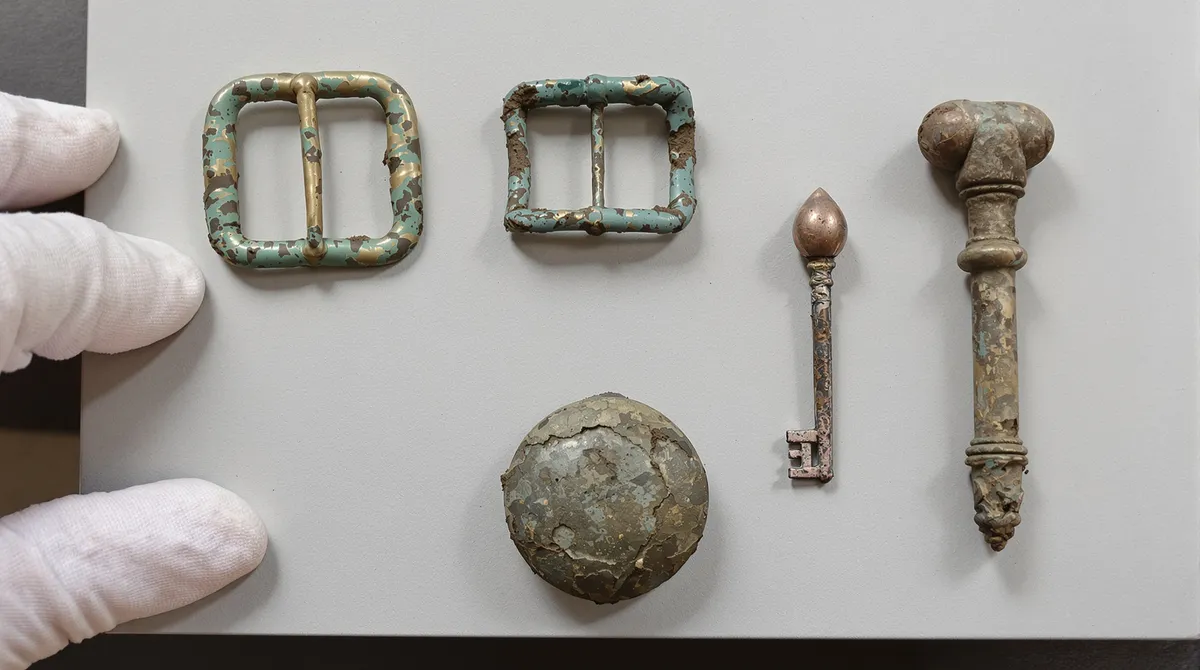
Most detectorists in England and Wales know the Portable Antiquities Scheme exists. Rather fewer use it, usually because recording sounds like paperwork, or like inviting scrutiny, or like something reserved for people who find hoards.
None of that is true, and the scheme is one of the genuinely good things about detecting in Britain. It is free, it is friendly, and it gives you an expert identification of your own finds — which is worth having entirely for selfish reasons, before you get to the part about contributing to national archaeology.
This is an orientation rather than legal advice. Our UK law guide covers the statutory obligations around treasure; this article is about the voluntary recording that sits alongside them.
What the PAS actually is
The Portable Antiquities Scheme is a national project to record archaeological objects found by members of the public — overwhelmingly by detectorists. It exists because an enormous quantity of material comes out of ploughsoil every year that no excavation would ever have reached, and without a mechanism to record it, all of that information simply evaporates.
The scheme runs a network of Finds Liaison Officers: archaeologists based in museums and local authorities across England and Wales whose job is to look at what the public brings in, identify it, and enter it into a public database. That database now holds well over a million objects and has genuinely reshaped academic understanding of several periods.
The critical point for detectorists: recording is not reporting. Recording a find with the PAS does not transfer ownership, does not trigger an investigation, and does not put your site on a public map. It creates a record. The object goes home with you.
Why bother, when it is voluntary
The archaeological argument is real, but let us start with the self-interested ones, because they are the ones that actually persuade people.
You get a free expert identification. An FLO handles this material constantly. What you think is an unidentifiable green lump is frequently a datable object with a name, and they will tell you which. Anyone who has spent an evening failing to identify a find will appreciate what that is worth.
You get a permanent, searchable record with photographs, a description, and a date range — attached to your name as the finder. If you ever sell, insure, donate or bequeath a collection, a PAS record is the difference between an object with provenance and an object with a story.
The database is superb for identifying your own future finds. It is full of material from the same kind of ground yours came out of, photographed and described by specialists. As an identification resource for the periods detectorists actually encounter, nothing else comes close — a point our coin identification guide makes in more detail.
It builds the relationship you will want later. The day you find something that might be treasure is not the ideal day to introduce yourself to your FLO for the first time. Detectorists who record regularly have someone they can ring.
And it protects the hobby. The single strongest argument against restricting detecting in Britain is the volume and quality of what detectorists have contributed through the PAS. Every record is part of that case.
What an FLO needs from you
The quality of a record depends almost entirely on what you bring, and this is where good field habits pay off.
An accurate findspot. This is the one that matters most, and the one most often missing. An object without a location is a curiosity; the same object with a decent grid reference becomes evidence — it can be plotted, related to other finds and to landscape features, and used to identify sites nobody knew existed. FLOs will tell you that an eight-figure grid reference transforms the value of a record.
Capture it at the moment of recovery, not afterwards. A GPS pin dropped while you are standing over the hole takes seconds; reconstructing it a fortnight later produces a guess. If you are worried about site confidentiality, see the section below — the concern is understood and handled.
The object, uncleaned. More on this shortly.
Context. What depth it came from, what the land use is, whether other finds came from the same spot, and anything unusual about the immediate area. A scatter of related material is far more informative than a single object, and only you know it was a scatter.
Landowner permission details. Recording assumes you had permission to be there. Having that straight — as covered in our permission guide — makes the whole conversation simpler.
Do not clean it
This deserves its own heading because the instinct to clean is overwhelming and the damage is irreversible.
Corrosion products, soil adhering to a surface, and the patina itself all carry information. Mineral-preserved traces of textile, leather or wood survive in corrosion layers and are destroyed instantly by scrubbing. Surface detail — lettering, decoration, tool marks — is frequently sitting under the dirt and comes off with it. An object cleaned enthusiastically at the kitchen sink can lose both its identifiability and its value in a single evening.
Bring it as it came out of the ground. Dry it gently if it is wet, put it somewhere stable and unrubbing, and leave the rest to people with the right training. Our guide to cleaning finds covers what is safe to do yourself and — more importantly — what is not.
What happens at a recording session
The process is far less formal than people expect.
Most FLOs run regular sessions, often at a museum or a club meeting, and many will arrange to see material by appointment. You bring your finds in a box. They look through them, set aside what is recordable, and photograph and measure those objects. You answer questions about where and how each one was found.
Then you take everything home. Recording usually happens over the following weeks, and the record appears on the database in due course with you credited as the finder.
If something looks like it may be treasure, the FLO will tell you and will handle the coroner reporting process with you. This is the point at which the voluntary scheme and the statutory obligation meet, and having an FLO involved makes a legal process considerably less daunting.
Practical courtesies that make you the sort of finder FLOs enjoy working with: bring finds sorted rather than in a single bucket, bring the findspots written down rather than in your head, do not bring three years of accumulated backlog to a first appointment without warning, and be patient — most FLOs cover a large area with limited time.
Site confidentiality is understood
The most common reason detectorists give for not recording is a fear of exposing their permissions. It is a reasonable concern and it is already addressed.
Findspot data is not published at full precision. Locations in the public database are generalised, precisely so that recording does not advertise a productive site to people who would work it without permission. The detailed location is held securely for research purposes.
FLOs deal with sensitive sites constantly and understand landowner confidentiality perfectly well. It is worth saying explicitly if you have concerns; they will explain how the data is handled.
Withholding a findspot to protect a site is a misunderstanding of who the risk is from — and it removes most of the archaeological value of the find while doing very little to protect anything. Our article on keeping detecting locations private covers the distinction between privacy from the public and secrecy from the recording authorities, which are not at all the same thing.
Scotland and Northern Ireland are different
Do not carry English assumptions across either border.
In Scotland, recording is not voluntary. All portable antiquities of archaeological, historical or cultural significance must be reported to the Treasure Trove Unit at National Museums Scotland — not just precious metal, and not just objects over a certain age. The Crown has a claim to such finds through bona vacantia, and this is a legal obligation rather than a courtesy.
In Northern Ireland, searching for archaeological objects requires a licence from the Department for Communities, and all archaeological objects found must be reported. The licensing requirement applies before you start, not after you find something.
Make it a habit, not an event
The detectorists who record well are not the ones with the best finds. They are the ones who capture findspots as a matter of routine, keep their finds organised, and see their FLO a couple of times a year rather than once a decade.
That is a logging habit more than an archaeological one. Record the location, the depth, and a photograph at the moment of recovery, keep it all in one place, and the recording conversation becomes a five-minute review of what you already have rather than an archaeology exam you did not revise for. Our logbook guide covers building the habit, and the documenting finds guide covers what to capture per object.
Do that, and you end up with something better than a box of interesting objects: a properly provenanced record of what came out of the ground, which is what turns a collection into history.
Frequently asked questions
Is recording finds with the PAS compulsory?
In England and Wales it is voluntary — only potential treasure must be reported by law. Scotland is different: all portable antiquities of archaeological, historical or cultural significance must be reported to the Treasure Trove Unit. Northern Ireland requires a licence to search for archaeological objects at all.
What does a Finds Liaison Officer do?
FLOs are archaeologists based in museums and councils who identify and record finds made by the public, free of charge. They add records to the PAS database, advise on whether something may be treasure, and handle the coroner reporting process with you if it is.
How old does a find have to be to record with the PAS?
The scheme records archaeological objects, and in practice the working threshold is objects made before about 1700, though later material of genuine interest is often recorded too. If you are unsure, show it to your FLO and let them decide rather than discarding it.
Should I clean a find before showing it to an FLO?
No. Cleaning can destroy surface detail, mineral-preserved traces of organic material, and evidence a specialist needs to identify and date the object. Bring it as it came out of the ground, dry and in a stable container, and let the professionals decide what conservation it needs.
Keep reading
Metal Detecting in the UK: Law, Treasure, and the Code
Permission, the Treasure Act, PAS recording, and why Scotland and Northern Ireland are different. A practical orientation for detecting legally in the UK.
How to Clean Metal Detecting Finds Without Ruining Them
Most damaged finds are damaged by their finder, not the soil. What is safe to clean, what to leave alone, and the methods that quietly destroy value.
How to Identify an Old Coin You Have Just Dug
A repeatable method for identifying dug coins — measure, read the metal, decode the inscription, and search properly. Plus where to get expert help free.