
Where Can You Metal Detect Legally? A Practical Checklist
Metal detecting laws vary by country, council, and landowner. Use this check-before-you-dig framework to detect legally and keep your access for good.
Updated
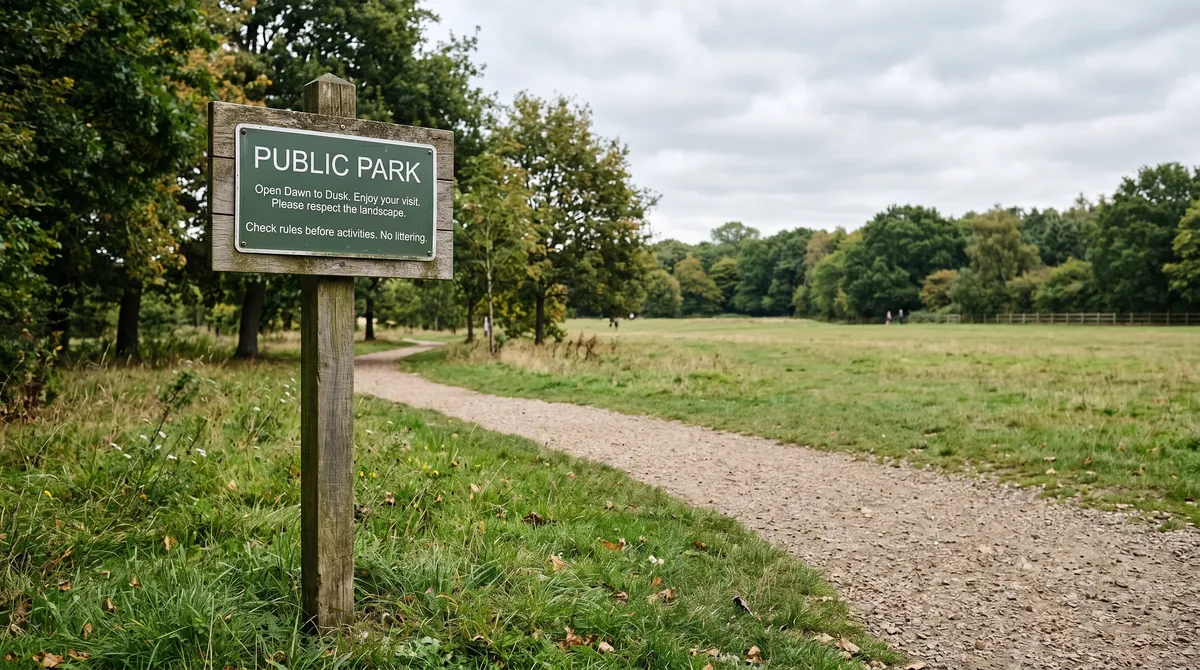
There’s no single answer to “where can I metal detect?” — and anyone who gives you one is wrong. Access depends on where you are in the world, who owns the land, who manages it, and whether the site has any heritage protection. The good news? You can sort it out with a simple checklist every single time.
This guide gives you that checklist. Use it before every new site.
Why there’s no universal rule
Metal detecting rules are set at many levels, and they stack on top of each other:
- Country and state law — including heritage and treasure legislation.
- Land ownership — private owners control access to their land, full stop.
- Land management — councils, park authorities, and foreshore bodies set their own rules on land the public can visit.
- Heritage status — protected sites can be off-limits regardless of who owns them.
So a beach in one town might be fine while the one in the next council area needs a permit. That’s normal. It’s why you check each site rather than assuming.
The one rule that is universal
Before the checklist, there is a single principle that resolves most confusion: all land belongs to somebody.
There is no such thing as land that is nobody’s, and therefore no such thing as land you may simply detect because it looks unclaimed. Verges belong to a highways authority. Woodland belongs to a forestry body or an estate. Beaches belong to a council or the Crown. Waste ground belongs to whoever has not developed it yet.
“Nobody was using it” and “there was no sign” are not permissions. Public access is not the same as permission to search and dig — those are separate things, and the second one is what detecting requires.
The check-before-you-dig framework
Run through these before you detect anywhere new:
- Who owns the land? Private, public, or unclear. If it’s private, you need the owner’s permission — see how to ask a landowner.
- Who manages it? Public land usually has a managing body — a council, parks service, or foreshore authority. They set the detecting rules.
- Are there published rules or permits? Many authorities post their policy online. Some require a free or paid permit. Read it.
- Is the site heritage-protected? Historic sites, monuments, and some reserves carry legal protection. When in doubt, stay out.
- Are there club or insurance requirements? Some land access runs through detecting clubs that carry liability insurance. Joining one can open doors.
- What’s the finds agreement? On private land, agree up front who keeps what — ideally in writing.
- Does the permission expire? Verbal “sure, go ahead” can be withdrawn. Note any time limits and renewal dates.
If you can answer those seven, you’re detecting on solid ground.
Land types, and what each usually means
The detail is local everywhere, but the categories behave predictably enough to be worth knowing.
Private farmland and pasture. The best ground in the hobby, and legally the simplest: you need the owner’s permission and that is essentially it, with heritage law still applying on top. Low pressure, high reward.
Council parks and recreation grounds. Governed by the council’s own policy, which varies from open access to outright prohibition, sometimes with a permit scheme. Neighbouring councils frequently take opposite positions.
Beaches and foreshore. Usually a council or national authority, and the rules can genuinely differ between the dry sand, the wet sand, and the dunes on a single beach. Dune systems are often protected for erosion control quite separately from any heritage concern.
Public rights of way. A footpath grants passage, not permission to search. The land beneath it belongs to the adjoining owner. This is one of the most common and most costly misconceptions in the hobby.
Common land. The name misleads people badly. Common land is owned — typically by a private owner or a manorial body — with certain rights held over it by others. None of those rights are a right to detect.
Woodland and forestry. Belongs to a forestry authority or a private estate, and both usually have a policy. Many prohibit detecting outright.
Churchyards and burial grounds. Effectively always off-limits, and the reputational damage from being seen detecting one is disproportionate.
Scheduled monuments and protected sites. Detecting or disturbing these without specific written consent is a criminal offence in many jurisdictions, and boundaries are not always obvious on the ground. Check the map, not the landscape.
Military land. Prohibited, and unexploded ordnance makes this a physical safety matter as well as a legal one.
Inland water, rivers and canals. Ownership of a riverbed is a genuinely complicated question, and navigation authorities usually have their own rules. Assume you need to ask.
Finding out who to ask
The practical obstacle is rarely willingness — it is not knowing who to contact.
For public land, start with the council’s website and search for their metal detecting policy directly. Many publish one. If not, the parks, open space, or foreshore team is the right department, and a short email gets a definitive answer.
For private land, the occupier is usually the person to approach, but the owner may be someone else — tenant farmers are common. Ask who owns it, and get the owner’s agreement where the two differ. Land registries in most countries let you look up ownership for a small fee.
For heritage status, the national or state heritage body publishes searchable maps of protected sites. Checking takes two minutes and it is the check people skip.
Keep the reply. A council email saying yes is exactly what you want to be able to produce if someone questions you on site.
How to write the email
Short, specific, and easy to answer:
Subject: Metal detecting policy — [park or beach name]
Hello,
I am a hobby metal detectorist and I would like to search [specific location] responsibly. Could you tell me whether this is permitted, and whether a permit is required?
I fill every hole, remove all metal rubbish I dig, and avoid any protected or sensitive areas.
Thank you, [Name and contact details]
Naming a specific site gets a specific answer. Asking about detecting “in the area” generally gets a generic no.
If you are challenged on site
It will happen eventually, and the way you handle it matters for every detectorist who follows you.
Stop detecting. Be polite, whatever their tone. Explain who you are and produce your permission — an email on your phone, a text from a landowner, a permit. If the person challenging you is the landowner or the managing authority and they ask you to leave, leave, even if you believe you are in the right; argue it afterwards by email rather than in a field.
If you cannot produce evidence of permission, you are in a much worse position than someone who can — which is the practical argument for keeping permission records somewhere you can reach them from the field rather than in your memory.
Private land: the gold standard
Honestly, private land with the owner’s blessing is the best position to be in. You get clearer permission, less competition, and often more interesting ground. The catch is you have to ask well — respectfully, with a plan for holes, rubbish, and finds. Our permission guide covers exactly how.
Public land: read the local rules
Parks, beaches, foreshores, and reserves are where most beginners start, and where the rules bite hardest. Don’t assume. Find the managing authority, find their policy, and follow it. If you can’t find a clear rule, contact them and ask — a polite email often gets you a clear yes or no.
Keep a record of your permissions
Once you start detecting across several sites, the details pile up: who said yes, what they allowed, when it expires, and any no-go zones on their land. Keep that somewhere reliable — not in your head.
Keep the written permission itself somewhere you can reach in the field — a photo of it on your phone does the job. In DetectingLog, every hunt carries a GPS pin and your notes, so the conditions a landowner set can sit with the record of each hunt you did there. It also pairs naturally with keeping your sites private.
Country-specific guides
The framework above works anywhere, but the detail is always local. We’ve written deeper orientations for the UK and for Australia, state by state:
- Metal detecting in the UK — the Treasure Act, PAS recording, and why Scotland and Northern Ireland follow different rules entirely.
- Metal detecting in Australia — Miner’s Rights, fossicking licences, park bans, and the state-by-state patchwork.
- Metal detecting in Victoria — the Miner’s Right in detail, the park exceptions, and the Golden Triangle.
- Metal detecting in NSW — no licence, but the consents, the 48-hour take limits, and the relics law.
- Metal detecting in Queensland — the fossicking licence, written permission, and the Clermont goldfield.
- Metal detecting in Western Australia — the Miner’s Right, tenements, 40E permits, and pastoral stations.
Reporting obligations are the other half of the picture, and they apply regardless of who gave you permission. In England and Wales, recording finds with the PAS is voluntary but strongly encouraged; in Scotland it is compulsory.
When in doubt, don’t dig
The whole hobby’s reputation rests on detectorists doing the right thing. One person digging where they shouldn’t can get a whole area closed off. If you’re not sure a site’s allowed, treat that uncertainty as a no until you’ve confirmed otherwise.
Ask first. Verify the official source. Then enjoy your hunt knowing you’re in the clear.
Frequently asked questions
Can I metal detect in public parks?
Sometimes. Public parks are controlled by a local council or land authority, and rules differ from one area to the next — some allow it, some require a permit, and some ban it outright. Always check with the body that manages the land before you detect.
Can I metal detect on a public footpath?
No. A right of way grants passage across land, not the right to search or dig on it. The land under a footpath belongs to someone, and detecting it without their permission is trespass in exactly the same way as detecting the rest of the field would be.
Do I need permission to detect on a beach?
Often, yes. Beaches and foreshores are usually managed by a government or local authority, and the rules can change between the dry sand, the wet sand, and protected dune areas. Check who manages the beach and what they allow before you go.
What happens if I detect somewhere without permission?
You risk trespassing, fines, confiscated finds, and losing access for every detectorist who comes after you. It can also break heritage protection laws if the site is protected. The cost of asking first is two minutes; the cost of not asking can be severe.
Keep reading
Miner's Right Victoria: Cost, How to Get One and the Rules
A Victorian Miner's Right costs $29.40 for 10 years, rising to $41.40 on 1 January 2027. How to buy one, what it lets you do, and the rules attached.
Metal Detecting in the Northern Territory: Permit and Land Access
The NT has required a fossicking permit since June 2026. How the free permit, fossicking notices, pastoral land, Aboriginal land and gold limits work.
Metal Detecting in South Australia: No Permit, Always Permission
South Australia needs no fossicking permit, but every block needs someone's consent. How Crown land, parks, Jupiter Creek and Mount Crawford work.